

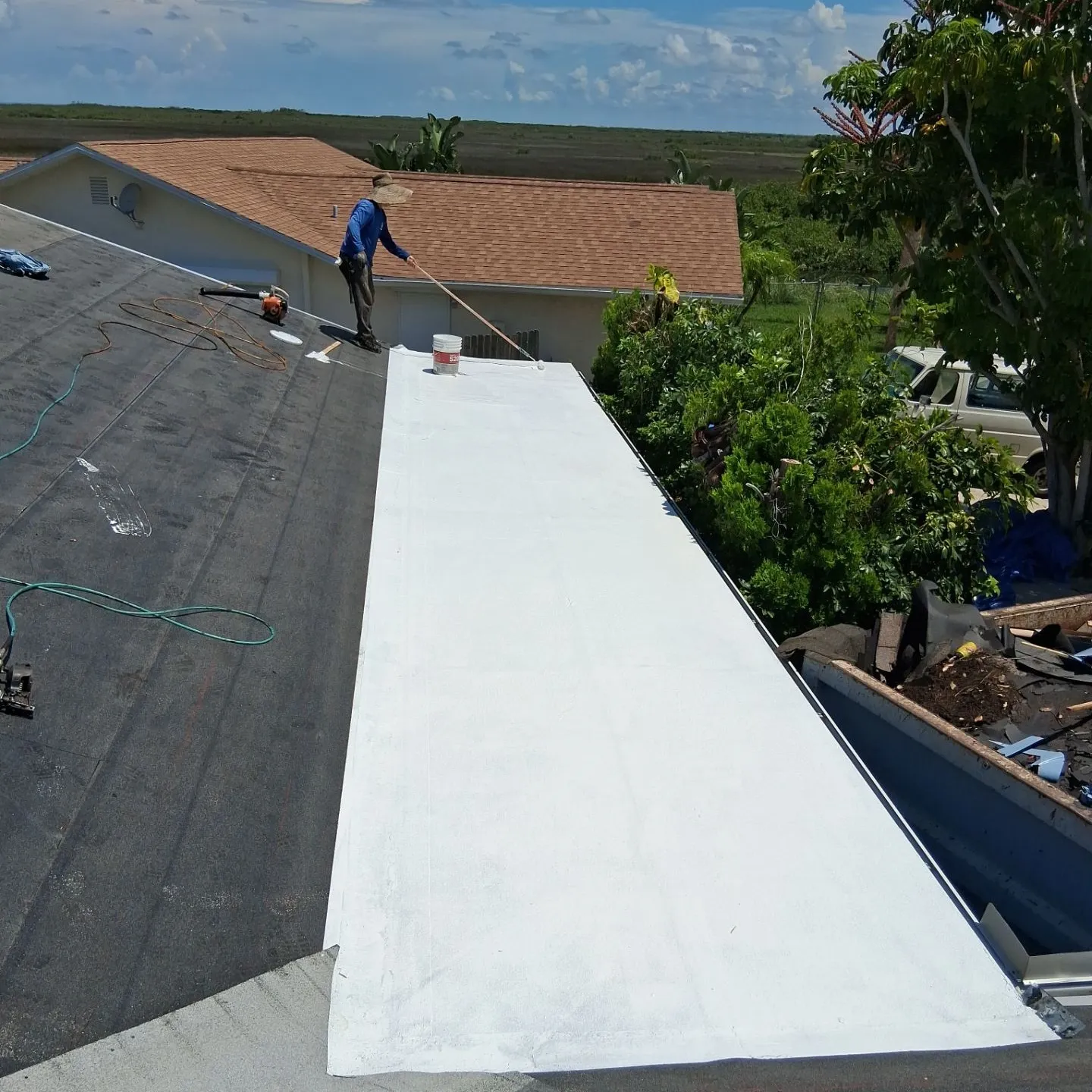
A homeowner off Rowan Road in New Port Richey called us in the second week of September a couple of seasons back. A tropical storm had brushed the coast overnight, and about forty square feet of shingles were gone off the west facing slope. When we pulled up the photos she had taken back in June, the same corner was already lifted. You could see daylight under it. The storm did not create that problem. The storm found it.
That is the honest summary of hurricane roof prep in Florida. Wind does not attack a roof evenly. It hunts for the one edge that is already loose, gets underneath it, and peels. Everything below is about finding those edges while a roofer can still get to you in a week, and while the fix still costs a few hundred dollars instead of a few thousand.
The short version
Atlantic hurricane season runs June 1 through November 30, and the Gulf coast sees most of its real action from mid August through mid October. Do the walk around and the repairs in spring. Get a wind mitigation inspection if you have never had one, because it often pays for itself in the first year of premium savings. Save dated photos of the roof before anything happens. Those three things cover the large majority of what a homeowner can control.
What Actually Fails First on a Florida Roof
Understanding the failure order tells you where to spend money. In nearly every storm damaged roof we have opened up in Pasco County, the sequence runs about the same way.
Wind hits the house, rolls up over the eave, and creates lift at the edges and corners. The perimeter of your roof takes far more uplift pressure than the middle does. So the drip edge, the starter course of shingles, the rake edges along the gable ends, and the ridge cap are where things start. Once one shingle tab breaks its seal, wind gets under the whole course above it. From there it unzips, sometimes across an entire slope in a matter of minutes.
The second failure point is anything that penetrates the roof. Pipe boots, the rubber collars around your plumbing vents, dry rot and crack in Florida sun in about eight to twelve years. Skylight flashing, chimney flashing, and the metal in valleys all rely on sealant that ages out. These do not blow off. They just let water in during the twenty hours of driving rain a storm brings, and the ceiling stain shows up two days later.
The third is everything that is not technically the roof but ends up on it. Soffit panels are the classic one. If wind pushes soffit out of the channel, the attic pressurizes from below and can push the roof deck up from the inside. Gutters full of water and debris pull loose and take fascia with them. And a limb that was fine in normal weather becomes a battering ram at eighty miles an hour.
The Season Long Preparation Plan
Photograph the whole roof in the spring
Walk the perimeter of the house and take clear, dated photos of every slope, plus the gutters, soffits, vents, and any skylights. Get a few from the street and a few from close in. Then take photos of the inside of the attic if you can get up there safely, especially the underside of the decking around any penetration.
Save them somewhere that is not just your phone. Email them to yourself, or drop them in cloud storage with your insurance documents. If you ever file a windstorm claim, before photos are the single most useful thing you can hand an adjuster. They turn an argument about pre existing wear into a simple comparison.
Look at the edges and the ridge from the ground
You do not need to climb anything. Stand back with binoculars, or use your phone camera zoomed in, and look specifically at the perimeter. You are looking for shingles that are lifted, curled, cracked, or missing entirely. Look at the ridge cap along the peak. Look at the rake edges running up the gable ends. Look for dark patches where the granules have worn off and the mat underneath is showing.
Anything that looks loose from sixty feet away is very loose up close. That is the honest rule of thumb.
Check every penetration
Count your plumbing vent stacks. Most Pasco County homes have two to four. Zoom in on each rubber boot. If the rubber looks gray and chalky instead of black and flexible, or if you can see a split running around the pipe, that boot is done. Replacing a pipe boot runs about $185 to $350 depending on access. Repairing the drywall, insulation, and framing after one leaks through a hurricane runs into the thousands.
Same goes for skylights, solar attachments, satellite dish mounts, and any old antenna bracket nobody has thought about in fifteen years. Every one of those is a hole in your roof that somebody sealed at some point.
Clear the gutters and check the soffit
Clogged gutters back water up under the shingle edge and rot the fascia. That rotted fascia is what gives way when the gutter fills during a storm. Clean them in the spring and again in early August after the oak and pine debris has come down.
While you are down there, walk the perimeter looking up at the soffit. Push gently on a panel or two. If a panel moves freely in its channel or is already sagging, get it secured. Soffit failure is one of the most common ways a Florida house takes catastrophic wind damage, and it is one of the cheapest things on this entire list to fix.
Deal with the trees in April, not August
Any limb that overhangs the roof or sits within about ten feet of it should come back. Any limb that is already dead should come out entirely. Tree crews in Pasco County are reasonable and available in spring. Once a storm is named, they are booked for three weeks and charging emergency rates.
One caution. Do not let a tree crew walk your roof to get at a limb unless you have talked about it first. We have repaired more than a few roofs that survived the storm and lost shingles to work boots.
Get a free inspection if the roof is over ten years old
A ground level look catches maybe seventy percent of what matters. The rest is on the roof and in the attic: fastener condition, soft spots in the decking, flashing that has pulled, sealant that has failed at the valley, and nail pops that have worked their way up through the shingle.
Our roof inspections are free, and you get photos and a written report whether you hire us or not. Take that report to whoever you want. The point is that you know what you are working with before a storm tells you.
The Repairs Worth Paying For Before June
Not every repair is worth doing before a storm, and we will get to that in a minute. But these are the ones where the math is not close.
- Cracked or aged pipe boots. Roughly $185 to $350 each. This is the single highest value repair on a Florida roof.
- Loose or lifted shingles at the edges and ridge. Usually $300 to $750 for a section, depending on how much has broken its seal.
- Failed flashing at valleys, walls, and chimneys. Typically $250 to $700. Flashing is where the slow leaks live, and a storm turns a slow leak into a fast one.
- Unsecured soffit panels. Often $200 to $500 for a run. Cheap insurance against a pressurized attic.
Get a Wind Mitigation Inspection
This is the part most homeowners skip, and it is the part that most often pays. A wind mitigation inspection documents specific construction features on your home using the state uniform form, and Florida Statute 627.711 requires insurers to offer premium discounts for the features it verifies. The inspector looks at your roof covering and whether it meets current code, the roof deck attachment, the roof to wall connection such as clips or single and double wraps, the roof geometry, whether you have a secondary water barrier, and your opening protection.
An inspection generally runs $75 to $150 in our area, and the report is typically good for five years. Homeowners routinely see annual savings well beyond that. If your roof was replaced any time in the last decade and nobody has ever filed a mitigation form for you, you are very likely paying more than you have to.
If you are already planning a roof replacement, ask about a secondary water barrier, sometimes called a sealed roof deck. It is a taped or self adhering layer over the decking seams. It adds cost up front, it earns a mitigation credit, and when the shingles do come off in a storm it is the difference between a wet attic and a destroyed house.
Know About the Twenty Five Percent Rule
Florida homeowners hear about this one constantly and usually hear it wrong. The Florida Building Code, Existing Building volume, section 706.1.1, has long said that when more than twenty five percent of a roof section is repaired or replaced within a twelve month period, the entire section has to be brought up to current code. In practice that often meant a full replacement.
That changed in 2022. Under the amendment passed that year, if your existing roof was built, repaired, or replaced in compliance with the 2007 Florida Building Code or later, only the damaged portion has to be repaired. So the age of your roof matters here, and the permit history on your address matters. Pasco County Building Construction Services can tell you what permits are on file for your property. It is worth knowing before an adjuster and a contractor start telling you different stories.
When not to spend money with us
If your roof is under about eight years old, was properly installed, and the ground level walk around turns up nothing, you do not need to spend a dollar with us before hurricane season. Clean the gutters, trim the trees, take your photos, and go enjoy your summer. We would rather tell you that now than sell you a repair you did not need.
The other one: if your roof is genuinely at end of life, sixteen to twenty years old with granule loss across every slope and soft spots in the decking, do not spend three thousand dollars on patch repairs in May. That money is better applied to the replacement you are going to need anyway. We will tell you honestly which situation you are in, and we will put it in writing.
And if a storm is already named and headed our way, stop reading this guide and go to What to Check on Your Roof Before a Hurricane. Different job, different timeline.
One local note before you go. Homes near the water in Gulf Harbors, along the coast in Hudson, and out toward the Anclote River in Tarpon Springs take the strongest wind first and get the worst of the salt air. The older roofs in Embassy Hills and Jasmine Estates have the least margin left to give. If that is your neighborhood, move this list to the top of the weekend pile.
When you want a second set of eyes, call Farrell Roofing at (727) 845-7663. We have been on Commerce Ave in Port Richey since 2003, our Florida license is CCC1327707, and we serve Port Richey, New Port Richey, Hudson, Holiday, Trinity, Tarpon Springs, Palm Harbor, Odessa, Land O' Lakes, and Spring Hill. The inspection is free and the report is yours to keep.
This Resource Center provides general educational information for Florida homeowners. It is not legal, insurance, engineering, or emergency management advice. Always follow instructions from local emergency management officials, and contact your insurance carrier with questions about your individual policy or claim.
For official storm information and evacuation orders, see the National Hurricane Center, Florida Division of Emergency Management, and Pasco County Emergency Management.