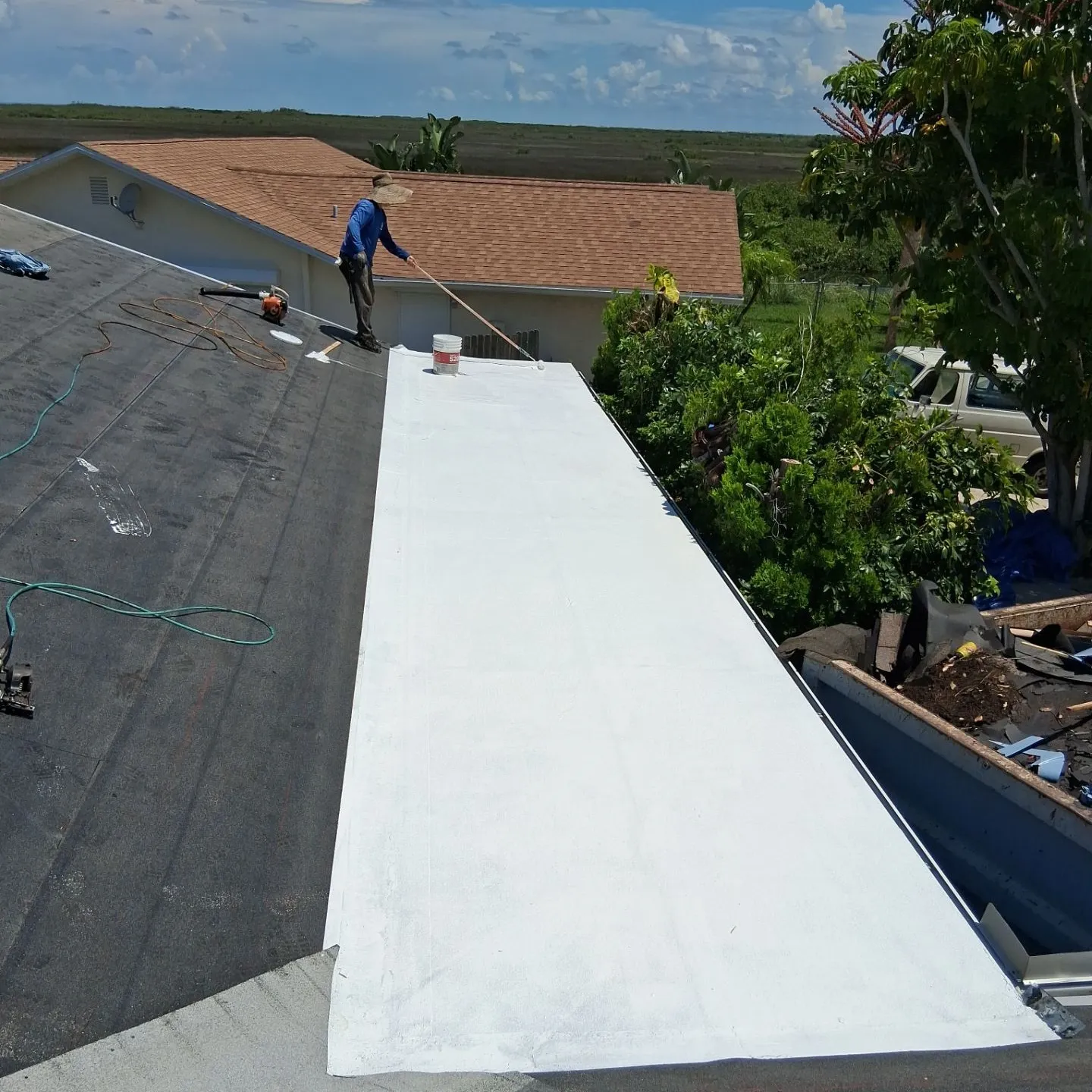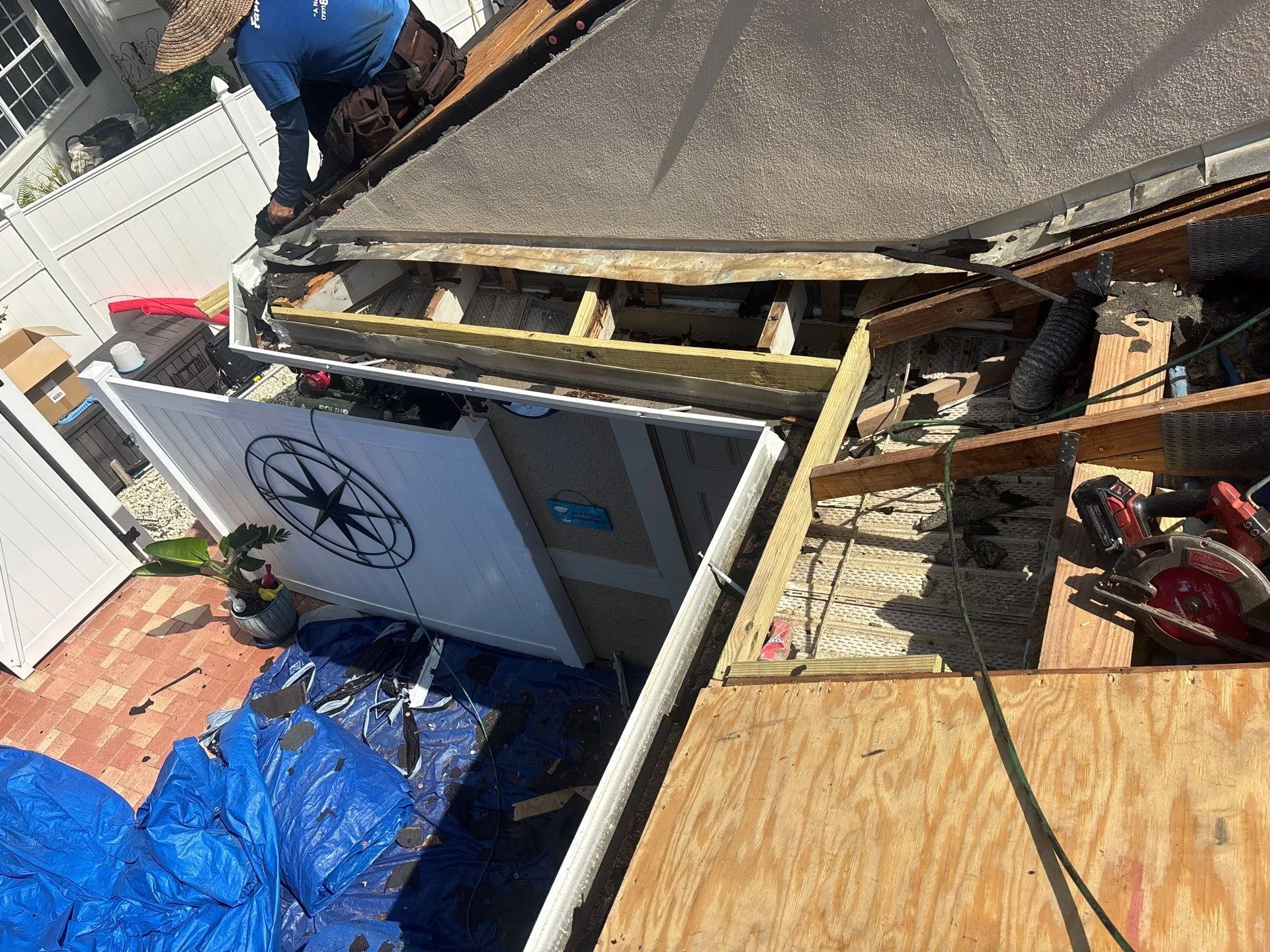

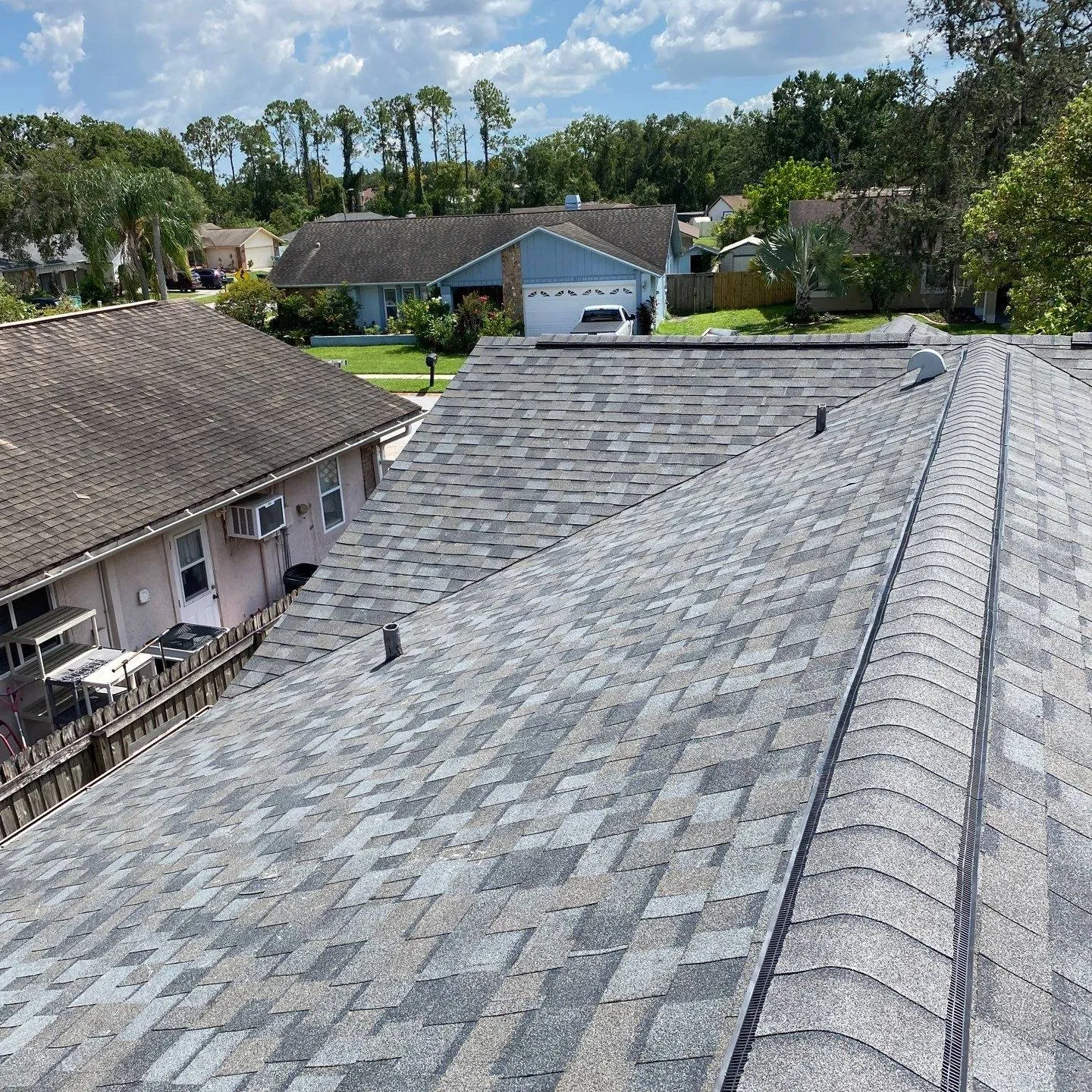
In eighteen years of pulling storm damaged shingles off Pasco County roofs, we have found the same thing over and over. The failure almost never starts in the middle of a slope. It starts at an edge that was already loose, and in most cases it was loose enough to see from the driveway weeks earlier.
That is the whole argument for preparation, and it is a narrower argument than most roofing companies make. We are not going to tell you that a new roof is hurricane insurance. Plenty of new roofs come off in a bad enough storm. What we will tell you is that the difference between a roof that loses four shingles and a roof that loses a whole slope is usually a handful of small problems that nobody dealt with in the spring.
These Are Actually Two Different Jobs
Homeowners tend to treat hurricane preparation as one task. It is two, and confusing them is why people end up paying emergency rates for work that could have cost half as much in April.
The first job is season preparation. It happens between December and May, when roofers are available and prices are normal. This is where repairs happen: pipe boots, flashing, loose shingles, soffit, ventilation. It is also where you handle the paperwork nobody thinks about, like a wind mitigation inspection and a set of dated photos of your roof in good condition.
The second job is the pre storm check. A system has a name, there is a cone on the television, and you have roughly seventy two hours. This is not the time for repairs. It is a walk around, a yard cleanup, some documentation, and one focused decision about whether anything is loose enough to be worth an emergency call.
What Wind Actually Does
Wind does not press down evenly on a roof. It rolls up over the eave and creates lift, and that lift is dramatically stronger at the perimeter and the corners than it is in the field of the roof. The drip edge, the starter course, the rake edges up the gable ends, and the ridge cap take the worst of it.
Once a single shingle tab breaks its seal, wind gets underneath the course above it. From there a slope can unzip in minutes. This is why a lifted corner that looks trivial in June is not trivial, and why we care so much more about your edges than about the middle of your roof.
The second thing wind does is find the soffit. If a soffit panel comes out of its channel, the attic pressurizes from below while wind is pulling from above, and the roof deck itself can lift. Securing loose soffit is one of the cheapest and highest value things on any preparation list, and almost nobody mentions it.
The five things that matter most
One. Cracked or chalky pipe boots. They are the most common leak source on a Florida roof and cost a few hundred dollars to replace.
Two. Anything lifted, curled, or loose at the roof edges and the ridge.
Three. Soffit panels that move when you push them.
Four. Limbs overhanging the roof, and any dead limb anywhere near the house.
Five. Dated photos of your roof in good condition, saved somewhere other than your phone.
The Calendar We Give Customers
Atlantic hurricane season runs June 1 through November 30, but that is not how the risk is actually distributed on the Gulf coast. The Gulf spends June and July warming, and the stretch that reliably produces storms for us runs from about mid August through mid October.
So the useful calendar looks like this. Repairs and inspections happen December through May. June and July are the last practical window to get a roofer out without competing with everyone else. Mid August through mid October you are in the pre storm check business, not the repair business. November you are mostly clear, and it is a good time to fix whatever the season revealed.
What You Cannot Fix in Seventy Two Hours
Being straight with you: once a storm is named and headed our way, a lot of the useful work is already behind you. You cannot re-roof a house in three days, you cannot get a wind mitigation credit applied to a policy already in force for this event, and you should not be starting a flashing repair while gusts are picking up.
What you can still do in that window is secure genuinely loose material, clear the yard and gutters, take photographs, read your deductible, and stage buckets and towels inside. That list is short on purpose, and every item on it is worth doing.
When Not to Spend Money With Us
If your roof is under about eight years old, was installed properly, and a ground level look turns up nothing, you do not need to spend a dollar with us before hurricane season. Clean the gutters, trim the trees, take your photos, and go enjoy your summer.
If your roof is genuinely at end of life, sixteen to twenty years old with granule loss on every slope, do not spend three thousand dollars on patch repairs in May. Put that money toward the replacement you are going to need anyway.
And if a storm is already inside forty eight hours, do not pay emergency rates for cosmetic work. Secure what will actually fail and let the rest wait for normal pricing in two weeks.
One local note. Homes near the water in Gulf Harbors, along the coast in Hudson, and out toward the Anclote in Tarpon Springs take the strongest wind first and the worst of the salt air. The older roofs in Embassy Hills and Jasmine Estates have the least margin left to give.
Call Farrell Roofing at (727) 845-7663 for a free inspection. Florida license CCC1327707, on Commerce Ave in Port Richey since 2003, serving Port Richey, New Port Richey, Hudson, Holiday, Trinity, Tarpon Springs, Palm Harbor, Odessa, Land O' Lakes, and Spring Hill. The report is yours to keep whether you hire us or not.