

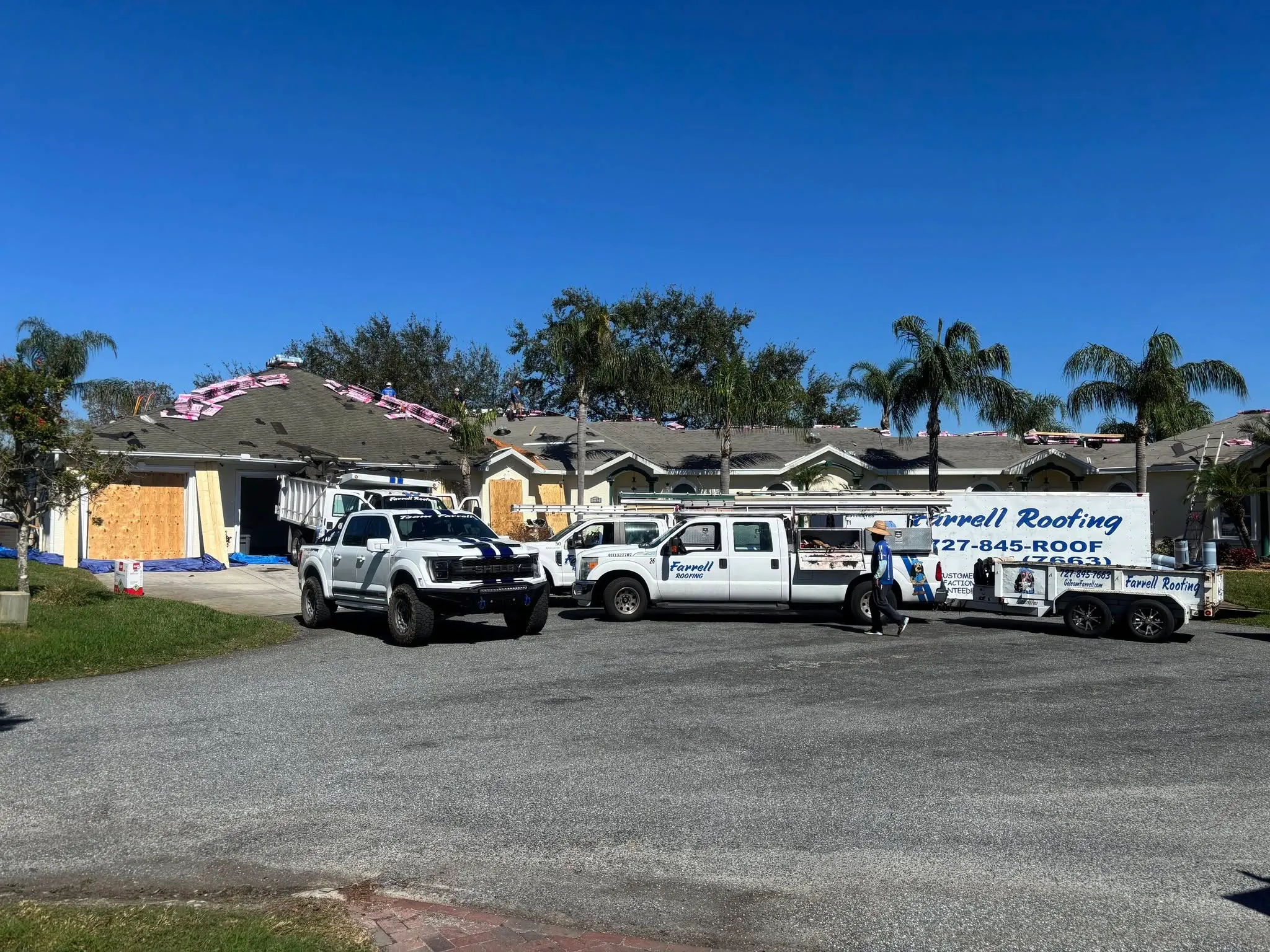
A homeowner off Seven Springs Boulevard in New Port Richey did everything right after a storm except one thing. He cleaned up first. He hauled the shingles out of the yard, swept the driveway, and bagged the debris before he took a single photo. It looked responsible. It cost him about three weeks of back and forth with his carrier, because the adjuster arrived to a tidy yard and a roof with missing shingles, and there was nothing on the ground tying the two together.
Photos are the whole ballgame on a storm claim. An adjuster may spend twenty minutes at your house, weeks after the fact, with a hundred other files open. Your photos are what fills in everything they did not see. Here is how to take the ones that actually help.
The one rule that matters most
Photograph everything before you clean up anything. Not the shingles in the yard, not the branch on the driveway, not the water on the floor. The debris on the ground is the evidence connecting the storm to the damage on your roof. Once it is bagged, it is gone.
The one exception is genuine safety and preventing further damage. You are always allowed to stop water coming into the house. Take a quick photo, then do what you need to do.
Think in Four Layers
Adjusters and roofers read a photo set the same way. They want to understand where they are, then what is broken, then how badly. If your photos jump straight to a close up of a torn shingle, nobody can tell which house it is on, let alone which slope.
So shoot in four layers every time. A wide shot showing the whole house or the whole elevation. A medium shot showing the damaged area in relation to something identifiable, like a window or a chimney. A close shot of the damage itself. And a context shot showing the cause, such as the limb that hit it or the debris on the ground below. Four photos per damaged area, minimum.
The Shot List
All four elevations of the house
Stand back far enough to get the whole side of the house in frame, and take one from each of the four sides. Do these first, before anything else. They establish the property, the date, and the overall condition, and they give every later photo somewhere to belong.
Every roof slope from the ground
Walk the perimeter and photograph each slope of the roof. Use your phone camera zoomed in rather than climbing anything. Get the ridge, the edges, the valleys, and any area where shingles are lifted, torn, or missing.
If you have a drone and know how to fly it, overhead shots are genuinely valuable. If you do not, do not buy one and do not borrow one. A roofer will get those images for you.
The debris, exactly where it landed
Shingles in the yard. Granules washed into the driveway or piled at the bottom of the downspout. Pieces of soffit or fascia. The limb on the roof or against the house. Torn screen from the pool cage. Broken fence panels.
Photograph each of these where it sits, then take one showing the debris and the house together in the same frame. That single photo does more work than any other in the set.
Every interior stain, drip, and wet spot
Ceilings, walls, floors, carpet, insulation, and the contents of any room taking water. Open closets and cabinets on affected walls and photograph inside them. Get the buckets and towels in frame, which shows you were mitigating.
If a stain is faint, photograph it anyway and photograph it again over the next few days. Water stains spread and darken, and a sequence showing that progression is persuasive.
The attic, if you can get up safely
Attic photos are the ones homeowners almost never take and adjusters find most useful. Wet insulation, water tracks on the underside of the decking, daylight coming through, and staining on the rafters all show the water path from the roof to the ceiling.
Only go up if the structure is sound, the power to that area is off, and you have a good light. If there is any doubt, skip it. We do this on every inspection.
Something for scale, and something for the date
Put a tape measure, a ruler, or even a dollar bill next to anything you are photographing close up. A hole in the decking means nothing without scale, and adjusters cannot judge size from a close up.
For the date, photograph a newspaper, a phone screen showing the date, or a local news broadcast. Phone photos already carry timestamps in their metadata, but a visible date in the frame removes any argument.
The Shots People Miss
After a couple hundred storm claims in Pasco County, the same gaps come up over and over. These are worth deliberately adding to your set.
- Granules in the gutters and at the downspout outlet. Heavy granule loss is one of the clearest signs of hail or severe wind driven rain, and it is almost never photographed.
- Soft metal. Gutters, downspouts, roof vents, air conditioner fins, and mailboxes dent before shingles bruise. Dents on soft metal help establish hail.
- Fence, shed, pool cage, and vehicles. Damage to these is covered under most policies and is frequently left off claims entirely.
- Your neighbors' roofs, from your own property. If the whole street took damage, that context matters when a carrier suggests your damage was wear and tear.
- Everything you throw away. Photograph ruined carpet, furniture, and drywall before it goes to the curb, and keep a written list.
Practical camera notes
Use your phone, not a fancy camera. Phone photos carry date, time, and usually GPS location in their metadata, which is exactly what you want. Leave that metadata alone: do not screenshot photos, because a screenshot strips it. Do not crop or filter. Send originals.
Take far more than you think you need. Three hundred photos is not excessive after a hurricane. Back them up off the phone as soon as you have service, because phones get lost and broken in exactly these circumstances.
Shoot short videos too. A slow walk around the outside and through each affected room, narrating what you are seeing and the date, captures things a still misses.
Do not climb on the roof to get the shot
Post storm roofs are the most dangerous ones there are. Decking can be soft where it looks fine, wet surfaces are slick, and hidden damage gives way underfoot. Every year people fall taking pictures of damage that a roofer would have documented for free.
Zoom from the ground. That is what the zoom is for. We bring ladders, harnesses, and a drone, and the photo set is yours whether or not you hire us.
When not to spend money with us
You do not need to pay anyone for a damage assessment or a photo report. Reputable roofers in Pasco County, us included, inspect for free after a storm. If someone wants a few hundred dollars up front to document your damage, that is a red flag, not a service.
You also do not need a public adjuster on a straightforward claim. They typically take a percentage of your settlement, which is capped by Florida law at ten percent for claims from a declared state of emergency in the first year and twenty percent otherwise. That can be money well spent on a complicated or denied claim. On a clean one with good photos, it is often just money.
Once you have your photos, the next step is turning them into an organized claim file. Read how to document roof damage for insurance for the deadlines, the paperwork, and what to expect from the adjuster.
If you would rather have somebody who does this every week take the photos, call Farrell Roofing at (727) 845-7663. Free storm inspections across Port Richey, New Port Richey, Hudson, Holiday, Trinity, Tarpon Springs, Palm Harbor, Odessa, Land O' Lakes, and Spring Hill. Florida license CCC1327707. We handle storm damage repair and full roof replacement, and we deal with adjusters constantly.
This Resource Center provides general educational information for Florida homeowners. It is not legal, insurance, engineering, or emergency management advice. Always follow instructions from local emergency management officials, and contact your insurance carrier with questions about your individual policy or claim.
For official storm information and evacuation orders, see the National Hurricane Center, Florida Division of Emergency Management, and Pasco County Emergency Management.